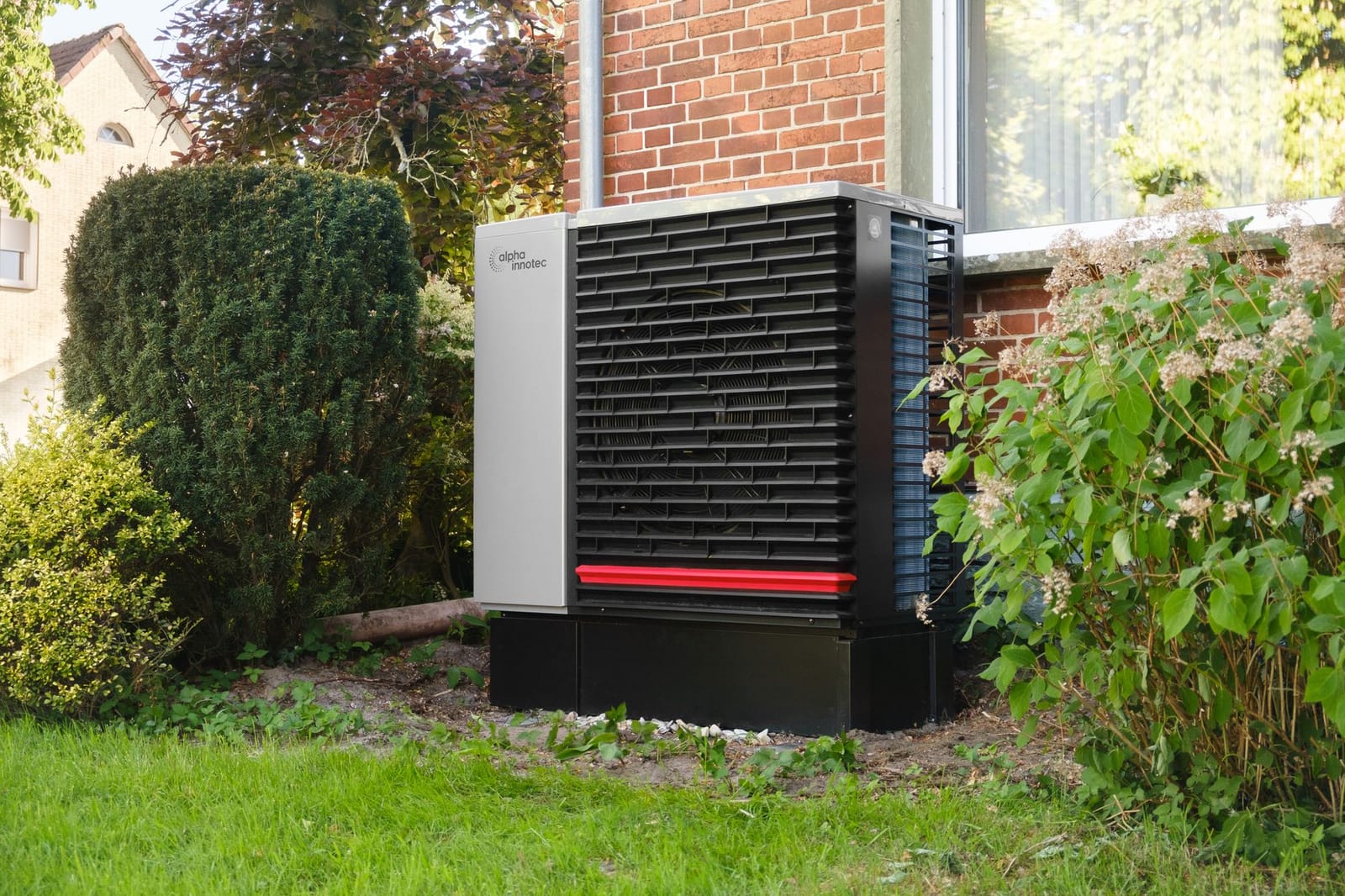
We design and install commercial heat pumps for UK businesses and public-sector buildings. That is the whole job, not a sideline bolted on to a general building or electrical firm. Our work covers air-source, ground-source, hybrid boiler-replacement, and high-temperature process systems, from a 40 kW office retrofit to multi-megawatt heat-network energy centres. We are a UK-wide operation working through SEO Dons and a network of vetted commercial heat pump engineers, so wherever your building is, the same design discipline and the same honest numbers follow it.
Why we only do commercial heat pumps
Domestic and commercial heat pumps look similar on a spec sheet and are very different jobs in practice. A house gets a single small unit and the £7,500 Boiler Upgrade Scheme. A commercial building gets a cascaded plant set, a heat-loss survey against twelve months of half-hourly data, an emitter and flow-temperature strategy, a DNO supply check, BS 4142 acoustics, and a funding route that has nothing to do with the domestic grant. Most installers chasing the boom started in housing and treat a 200 kW plant room like a big version of a domestic job. We went the other way. Commercial buildings are what we know, and the commercial funding maze (PSDS, IETF, the Green Heat Network Fund, full expensing) is where a specialist actually earns the fee.
Our approach
We are independent of any one manufacturer, so we specify the unit that fits the building rather than the brand we happen to stock. Every proposal models running cost and carbon from your real consumption data at current and forecast prices, not a generic estimate, and we hand you the model so you can stress-test it or get a second opinion. We design to the recognised standards, BS EN 14825 for SCOP and BS EN 14511 for rated COP, which means our performance figures are directly comparable to any other compliant quote you receive. The single biggest lever on running cost is flow temperature, so we survey your existing emitters first and design for 45 to 55 degrees wherever the building allows, rather than quoting a strip-out you may not need.
We will model air-source, ground-source, and hybrid side by side and tell you which one earns its keep on your building. Sometimes the honest answer is a hybrid with a retained peaking boiler, because re-emittering the whole site does not pay. Sometimes it is to improve the fabric first. We would rather lose a job to honest maths than win it on a number we cannot stand behind, and we will tell you up front if your building is not ready for a heat pump yet.
Our accreditations and compliance
Our engineers hold MCS certification (and the MCS 025 heat-pump competency standard) for systems up to 45 kWth, which is what most grant routes require, and we design larger plant to CIBSE and BSRIA standards above that threshold. All refrigerant work is carried out by F-Gas certified engineers under the UK F-Gas Regulation, including the natural-refrigerant (R290, CO2, ammonia) designs that high-temperature duties increasingly need, with the DSEAR and ATEX siting that flammable refrigerants demand. We are NICEIC registered on the electrical side and Gas Safe registered for any retained or hybrid gas boiler, and we run BS 4142 acoustic assessments as standard rather than as an afterthought when a neighbour complains.
Each of these accreditations can be checked against the issuing body, which is exactly how it should be. If a contractor cannot point you to a verifiable MCS or F-Gas registration, walk away. The compliance most installers skip, the acoustic assessment, the refrigerant handling paperwork, the DNO supply conversation started early, is the compliance we do by default, because skipping it is how projects stall at planning or fail at commissioning.
Why we are different from the cowboys
The heat pump market grew fast, and fast-growing markets attract over-promised quotes. The decision-makers we work with, facilities managers, estates directors, finance directors, have usually been burned by a number that looked too good before the install proved otherwise. Our answer is transparency: a modelled business case from your own data, performance quoted to a published standard, a clear view of what the building needs before any kit is ordered, and a changeover planned around your operating calendar so you are never without heat through commissioning. That is the standard a commercial buyer should expect, and it is the one we hold ourselves to.